
Types of fleece fabric
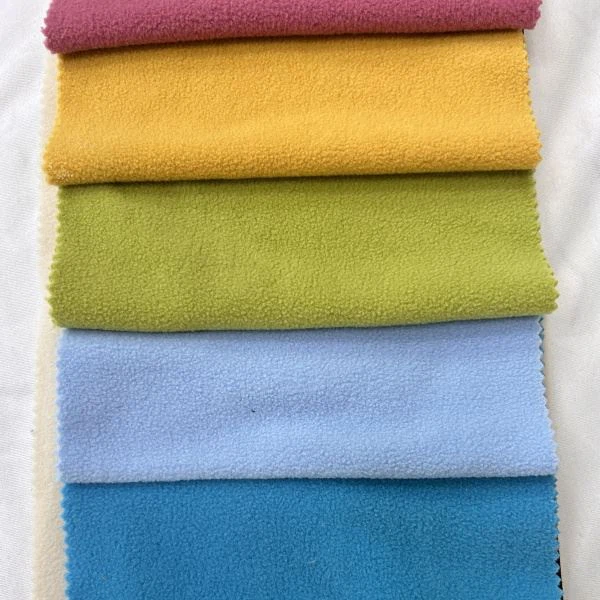
Polar Fleece
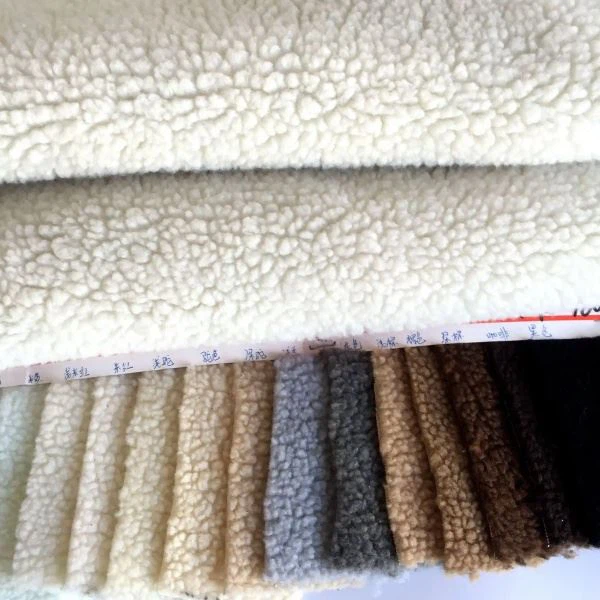
Sherpa fleece
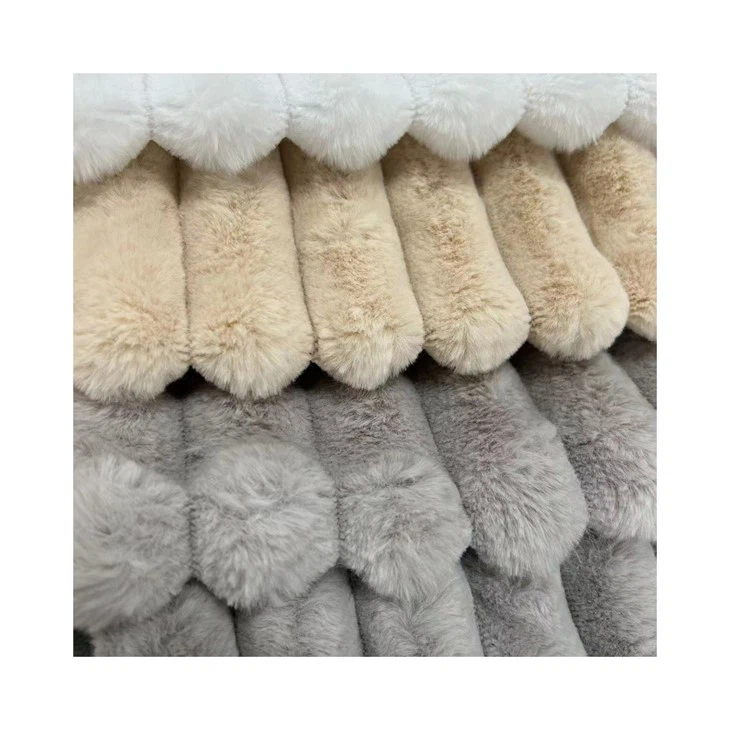
Plush fabric
Coral fleece fabric
French terry fabric
Rabbit fleece
Process of fleece fabric

Harvesting and Sorting.
The sorting process was vital as different sheep produce different quality of wool, resulting in different produce like clothing, carpets and blankets, while the quality of wool varies depending on the part of the sheep's body it comes from.

Willowing, Scouring and Dying
The fleece is put through a willower to untangle the wool, removing impurities such as dust and sand, disentangling it on a roller with metal teeth to create a soft, fluffy mass of fibers.
scoured the wool before willowing.dye wool

Carding, Spinning and Winding
Carding produces fully disentangled, soft rolls of wool called rovings or rolags,
Spinning pulls and twists the fibers together to form a continuous thread, turning the soft rolls into strong woollen yarn,
Winding, unwinding and winding again are all essential processes in preparing yarn for weaving.

Warping, Weaving and Finishing
Warping by hand is one of the most intricate of all textile processes, with all the threads for the warp of a piece of cloth placed in the correct order, and colour sequence, before weaving.
Weaving turns the yarn into cloth, which is made of two sets of threads. The warp thread sit side by side, and the weft threads are woven under and over the warp – under one, over one, under over … and so on.As well as washing and drying; fulling, napping and pressing were all part of the finishing process.

The natural curly structure of wool fibers with excellent thermal insulation performance can form an air barrier, effectively isolating cold air and maintaining body temperature, especially suitable for winter wear. Its high hygroscopicity can quickly absorb moisture from the skin surface and expel it, avoiding stuffiness and heat sensation. High comfort, wool texture is soft and skin friendly, with good elasticity recovery. When worn close to the body, it fits snugly and is not prone to static electricity or irritation. Its breathability can keep the skin dry and comfortable to wear in summer. Durable wool fibers have excellent wrinkle resistance, tear resistance, and abrasion resistance, and can maintain their shape and color even after multiple washes. Fiber has high elasticity recovery and is not easily deformed. Wool is a natural protein fiber with environmentally friendly characteristics, and its production process has minimal impact on the environment. Clothing can be recycled and reused, in line with the trend of sustainable fashion.
Moisture proof treatment and sealed storage: After washing, stack in a dry sealed bag, add desiccants or camphor wood strips, and then place in a waterproof storage box or Oxford cloth bag. Ventilation and drying: Before storage, air dry in a ventilated area for 2-3 hours, gently pat to remove dust, and store in a dry wardrobe. Clothing form maintenance, hanging and storage: Dark woolen coats can be hung on hangers to avoid shoulder deformation caused by long-term folding. Stacking technique: It is recommended to wrap light colored clothing in newspaper and lay it flat to avoid fading caused by contact with camphor balls. Precautions: Avoid mixing with synthetic fiber clothing, and pure wool products should be stored separately. The storage environment should be kept ventilated and dry, and the cabinet should be opened regularly for ventilation

Related Products